I still remember the “dark ages” of 2010. I was sitting in a cramped office, staring at an Excel sheet with 5,000 leads, manually copy-pasting names into a generic template. I hit “Send,” and then… silence. Maybe a 10% open rate if I was lucky. Most of it went straight to spam. It was soul-crushing work.
Fast forward to 2026. If you are still doing manual outreach, you aren’t just wasting time; you are actively burning your addressable market. The game has changed entirely. It’s no longer about who sends the most emails; it’s about who sends the smartest ones.
This is where AI Email Marketing enters the chat. I’m not talking about asking ChatGPT to “write me a sales email” and pasting it into Outlook. I’m talking about building a sophisticated, automated engine that researches your prospects, hyper-personalizes content, and manages replies while you sleep. In this guide, I will share the exact workflows I use to achieve 60%+ open rates and triple-digit increases in conversion rates.
We are going to move beyond basic email personalization and dive into how AI Email Marketing can transform your sales funnel from a leaky bucket into a precision instrument.
Why Traditional Cold Email is Dead (And What Replaced It)
Let’s be honest: nobody likes spam. In the last few years, major providers like Google and Yahoo have tightened their spam filters significantly. The “spray and pray” method isn’t just ineffective; it’s dangerous for your domain reputation. If you send generic blasts today, you will be blacklisted by tomorrow.
The modern solution leverages marketing workflows driven by machine learning. It’s about relevance at scale. AI Email Marketing allows us to treat 10,000 prospects as if they were 10 distinct individuals. It analyzes data points—LinkedIn posts, company news, funding rounds—to craft messages that feel like they were written by an old friend, not a robot.
To really succeed, you need to understand how automated email sequences work in a modern context. It is not just about scheduling; it is about dynamic adaptation based on user behavior.
The Preparation: Building Your AI Arsenal

Before we start clicking buttons, we need the right infrastructure. You cannot build a Ferrari engine and put it in a go-kart. Here is what you need to set up a professional AI Email Marketing system.
- Dedicated Domains: Never use your primary domain (e.g., @yourcompany.com) for cold outreach. Buy secondary domains (e.g., @getyourcompany.com). This protects your main business email from potential blacklisting.
- Email Infrastructure: You need Google Workspace or Outlook accounts connected to these domains.
- Authentication Protocols: This is non-negotiable. You must configure SPF, DKIM, and DMARC records. Without these, your AI Email Marketing efforts are dead on arrival.
- The AI Stack: You will need a database tool (like Apollo or Clay), an AI writing agent (OpenAI API or Claude), and a sending platform (like Instantly or Smartlead).
Step-by-Step Guide to Automating Your Outreach
This isn’t theory. This is the exact workflow I implement for my enterprise clients. Follow these steps to build smart email campaigns that convert.
Step 1: Data Enrichment and Cleaning
Garbage in, garbage out. If your email list is bad, no amount of AI will save you. First, we use AI to verify leads.
I use tools that don’t just scrape emails but verify them against current employment data. But here is the secret sauce: AI-based segmentation. Instead of just “CEO” or “Manager,” ask your AI to categorize leads based on their company’s recent activity. For example, “Companies that hired a VP of Sales in the last 3 months.”
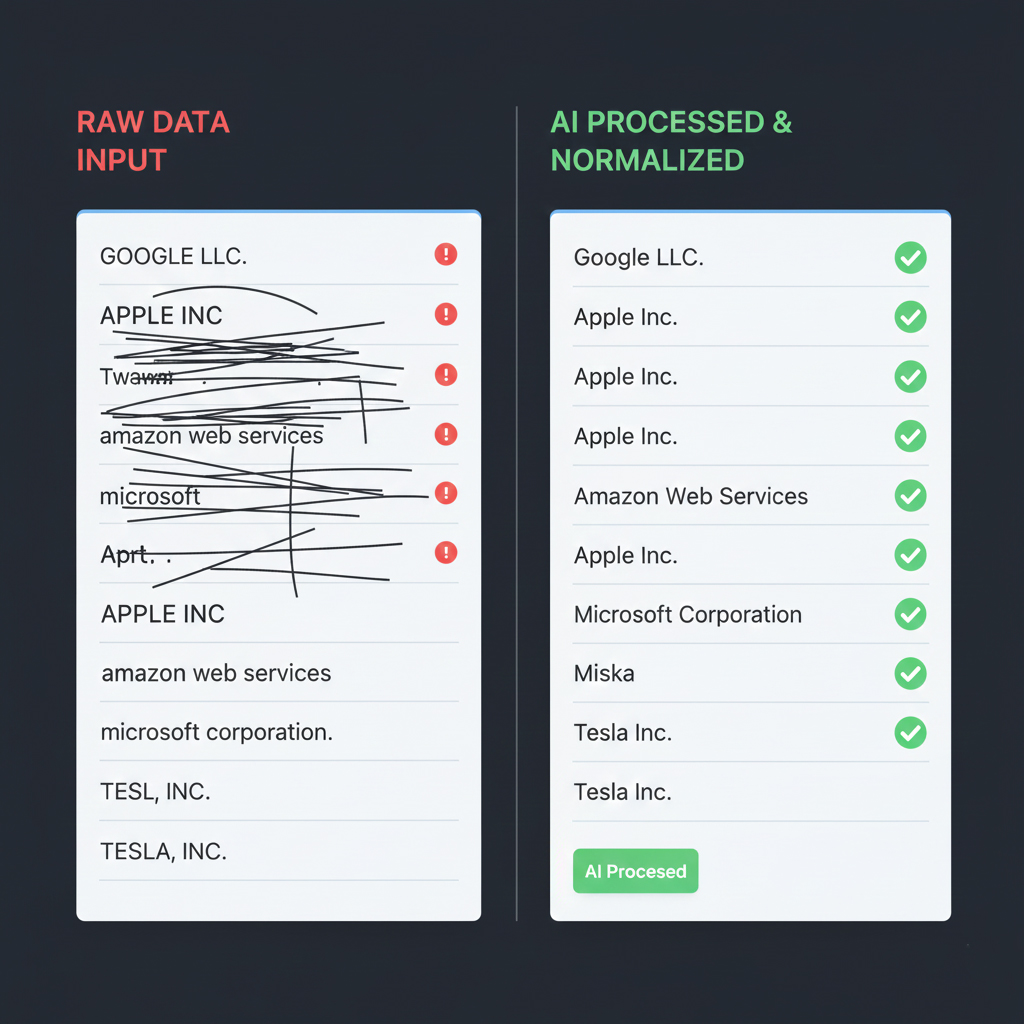
Expert Pro Tip: Use an AI agent to clean your “Company Name” field. A raw CSV might say “Apple Inc. (North America).” You want your email to say “Apple.” I run a script to normalize all company names before they ever hit the email template.
Step 2: prompt Engineering for Dynamic Copy
This is where most people fail. They use a single prompt for 1,000 people. To master AI Email Marketing, you must use dynamic variables.
We need to construct a prompt that ingests the prospect’s data and outputs a unique sentence. Here is a simplified version of a prompt I might use in a tool like Clay or via Python script:
“Act as a senior sales director. Based on the following news snippet regarding {{Company_Name}}: ‘{{News_Snippet}}’, write a casual, 15-word opening line congratulating {{First_Name}} on this specific achievement. Do not sound salesy. Keep it lower case.”
By doing this, every single email starts with a hyper-relevant hook. This is critical if you want to increase email conversion rates significantly compared to static templates.
Step 3: Setting Up the “Spintax”

Even with AI intro lines, the body of your email needs variation to fool spam filters. This is called Spintax (Spin Syntax). It looks like this: {Hi|Hello|Hey}.
I use AI to rewrite my value proposition in 5 different ways. The sending tool rotates these variations. This ensures that no two emails look identical to Google’s algorithms, keeping your deliverability high. Email automation tools rely heavily on this to maintain sender health.
Step 4: The Smart Follow-up Sequence
The money is in the follow-up. But don’t just say, “Did you see my last email?” That’s annoying.
Use automated email sequences that add value.
Email 1: The Hook (AI personalized).
Email 2: The Case Study (Relevant to their industry).
Email 3: The Break-up (Polite removal).
I configure my AI to stop the sequence immediately if a reply is detected—even an “Out of Office” reply. Advanced AI tools can now parse an OOO reply, read the return date, and automatically reschedule the next follow-up for when the prospect returns. That is the power of AI Email Marketing.
Optimizing for Opens: The AI Subject Line Strategy
You can write the best email in the world, but if they don’t open it, it doesn’t matter. Learning how to use AI for email subject lines is a game changer.
I run my subject lines through AI scorers before sending. I look for shortness (under 4 words) and curiosity.
Bad: “Question about your sales team at {{Company}}”
Good: “sales team idea”
AI can analyze your past campaigns to tell you which keywords are triggering opens and which are triggering spam filters. It is continuous learning.
Troubleshooting Common AI Email Issues
Even with 15 years in the game, things break. Here are common pitfalls in AI Email Marketing and how to fix them.
1. High Bounce Rate (>2%)
The Problem: You are sending to invalid emails.
The Fix: Tighten your verification settings. Use a “Catch-all” verifier. If you aren’t sure an email is valid, don’t send it. It’s better to send fewer emails than to ruin your domain.
2. Low Open Rates (<30%)
The Problem: You likely have a deliverability issue, or your subject lines look automated.
The Fix: Check your technical setup using a tool like GlockApps to see if you are landing in spam. If technicals are fine, rewrite your subject lines to be more lowercase and casual. Best email automation software for startups often includes built-in deliverability warm-up tools—use them!
3. The “AI Hallucination”
The Problem: The AI wrote something weird or factually incorrect about the prospect.
The Fix: Always have a “Human in the Loop” for the first 50 emails of a new campaign. Once you trust the prompt, you can scale. Never let AI run fully autonomous without spot checks.
Reviewing the Top Tools for 2026
There are hundreds of tools, but only a few stand out for serious marketing workflows.
Instantly.ai / Smartlead: These are currently the gold standard for sending. They offer unlimited email accounts and “Warm-up” features that automatically send and reply to emails between your accounts to build trust with Google.
Clay.com: This is the best tool for data enrichment. It acts like a spreadsheet on steroids that can query GPT-4, scrape websites, and find emails all in one row.
Lavender: An incredible email coaching assistant that analyzes your draft in real-time and tells you why it sucks (and how to fix it). It is essential for learning email personalization psychology.
Check out independent reviews from trusted sources like Gartner Marketing Insights to verify which tools fit your specific budget and scale.
Conclusion: The Future is Automated, but Human
We are standing on the edge of a revolution. AI Email Marketing isn’t just about efficiency; it’s about capability. It allows a small sales team of two people to do the work of twenty. But remember this: AI is the vehicle, not the driver.
You must provide the strategy, the creative direction, and the empathy. The goal of smart email campaigns is to start a conversation, not to close a deal instantly. Use AI to get your foot in the door, and then use your human skills to walk through it.
If you implement the steps I outlined above—cleaning your data, testing your infrastructure, and crafting dynamic, value-driven content—you won’t just see better open rates. You will see a fundamental shift in how your market responds to you.
Start small. Set up one campaign today. Watch the data. Iterate. The tools are there; it’s time to get to work.
Frequently Asked Questions
Is AI Email Marketing safe for my domain reputation?
Yes, but only if done correctly. You must use secondary domains (not your primary company domain), set up SPF/DKIM/DMARC records properly, and use a “warm-up” tool to gradually increase sending volume. If you blast thousands of emails from a new domain immediately, you will be blacklisted.
How does AI improve email open rates?
AI improves open rates by analyzing historical data to predict the best sending times and by helping craft subject lines that bypass spam filters. Furthermore, AI enables hyper-personalization, making the email look like a one-to-one message rather than a bulk newsletter.
What is the best email automation software for startups in 2026?
For startups, tools like Instantly.ai and Smartlead are highly recommended because they offer unlimited email accounts for a flat fee, which keeps costs low as you scale. For the actual writing and data enrichment, Clay and Lavender are top-tier choices.
Can AI write the entire email for me?
Technically yes, but it is not recommended to let it run 100% autonomously without oversight. The best approach is a hybrid model where AI drafts the email based on specific data points (news, LinkedIn profile), and a human reviews the strategy and template structure. This prevents “hallucinations” and awkward phrasing.