
The question hanging over every marketing department right now is: Will AI Search replace SEO?. It was Black Friday, and while the rest of the world was hunting for deals, I was glued to my server logs.
For the past two decades, I’ve weathered every Google storm—from the Florida update in 2003 to the Panda and Penguin massacres. But what I saw in the data recently felt different. It wasn’t just a fluctuation in rankings; it was a fundamental shift in how users were finding my clients.
According to recent data from Semrush, 20 major retailers (including giants like Best Buy and Etsy) are now seeing an average of 183,000 daily visits coming directly from ChatGPT and other Large Language Models (LLMs).
You might say, “That’s peanuts compared to Google.” And you’d be right. But here is the kicker: that number is nearly 8 times higher than it was last year. In 2023, that traffic was virtually zero.
As the CMO of Expedia recently admitted, “If anyone tells you they know for sure what AI Search will look like in two years—I don’t believe them.”
I don’t have a crystal ball either. But after spending thousands of hours testing Answer Engine Optimization (AEO), debugging hallucinating bots, and analyzing traffic patterns, I have a survival strategy.
In this guide, I’m going to skip the theory. We are going to dive deep into the technical reality of AI Search marketing, why some startups are failing while others raise millions, and exactly how you need to “re-plumb” your website to survive the transition from traditional SEO to the age of AI.
The Great Divide: Is SEO Dying Because of AI Search?
Before we open our toolkits, we need to understand the battlefield. The industry is currently split into two violent factions, and understanding why will help you decide where to put your budget.
The “SEO is Alive and Well” Camp
I’ve seen tools come and go, but the story of Benjamin Houy and his startup, Lorelight, is a cautionary tale I share with all my consulting clients. Lorelight was designed to “optimize brands for LLMs.”
Houy shut it down after just six months.
Why? Because his data proved something reassuring for us veterans: You cannot “hack” AI. The LLMs didn’t care about cheap tricks. They cared about the same things Google has preached for years:
-
High-authority citations.
-
Deep, genuine subject matter expertise.
-
E-E-A-T (Experience, Expertise, Authoritativeness, Trustworthiness).
My Take: If you think you can use an AI tool to generate spammy content to rank in an AI search engine, you are going to lose. The “SEO is dead” narrative is false if you define SEO as “providing value.”
The “AEO Revolution” Camp
On the flip side, we have the rise of Answer Engine Optimization (AEO). Startups like Evertune and Profound are raising $15M to $35M based on a single premise: In 5 years, AI Search will be a one-way street.
Brian Stempeck from Evertune points out a trend I see in my own household: college students aren’t “Googling” anymore. They are asking ChatGPT, Gemini, or even searching on TikTok.
The prediction? The market for SEO + AEO will hit $171 billion by 2030.
The Verdict: Convergence
I agree with James Cadwallader from Profound: SEO and AI Search will merge. Agencies will simply add “AI Visibility” to their SOWs. But here is the secret sauce that most gurus won’t tell you: LLMs are hungry beasts. They need more data than Google to form a coherent conversational answer.
This means the era of “thin content” is officially over.
Preparation: What You Need to Audit Your AI Visibility
Before we start fixing your site, you need to see how the machines see you. You cannot optimize what you cannot measure.
The Toolkit
-
Google Search Console (GSC): To monitor traditional search fallout.
-
ChatGPT Plus / Gemini Advanced: You need the paid versions to test “browsing” capabilities effectively.
-
Perplexity AI: This is currently the closest thing we have to a functioning “Search + AI” hybrid.
-
A “Clean” Browser Profile: AI results are highly personalized. Always test in Incognito or a fresh browser instance to avoid bias from your history.
The Mindset Shift
Stop thinking in Keywords. Start thinking in Entities. Google matches string A to string B. LLMs understand the relationship between concepts.
-
Old SEO: Keyword “Best Italian restaurant NYC.”
-
AI Search: “I’m planning a romantic date in NYC, somewhere quiet with gluten-free pasta options. What do you recommend?”
The AI needs to know your restaurant is an entity connected to attributes: “Quiet,” “Romantic,” “Gluten-Free,” “NYC.”
Step-by-Step Guide: How Marketers Should Adapt to AI Search
This is the exact workflow I use for my enterprise clients to future-proof their content.
Step 1: Restructure Content for “Machine Readability”
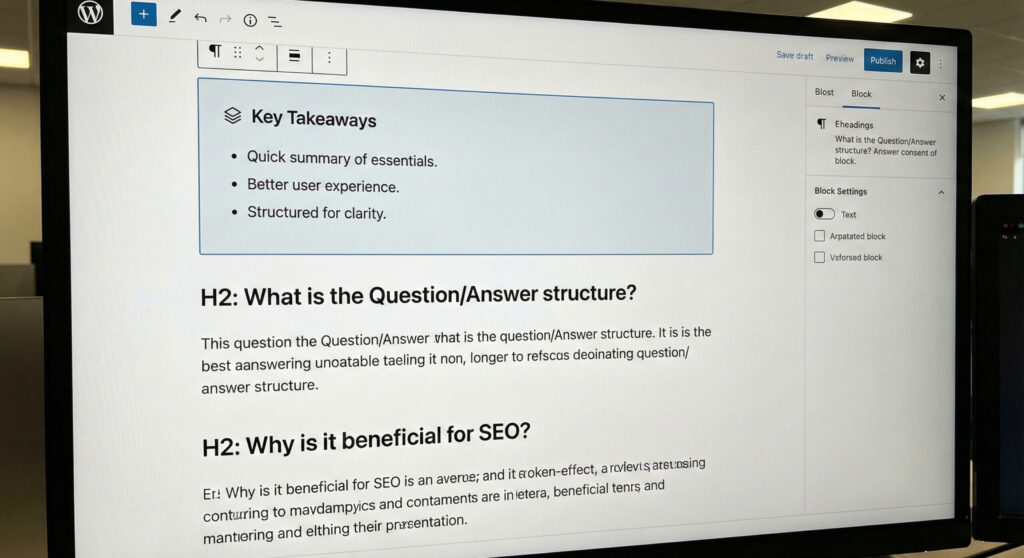
One of the biggest observations from recent data is that formatting matters. While humans like flowery prose, LLMs love structure. Bullet points and summaries act as “hooks” for the model to grab onto when generating an answer.
The Action Plan:
-
The Summary Box: At the top of every long-form article, add a “Key Takeaways” section. This feeds the AI the exact summary you want it to display.
-
Granular Details: Expedia found that providing hyper-granular data (e.g., specific dimensions of a hotel pool, exact voltage of outlets) helped them surface in AI queries.
-
Q&A Formatting: Rewrite your H2s as questions and immediately follow them with a direct answer before expanding.
Step 2: Implement “Conversational” Schema Markup

We used to use Schema just to get star ratings in Google. Now, we use it to feed the Knowledge Graph. If your data isn’t in JSON-LD, the AI has to “guess” what your content is about. Don’t let it guess.
The Action Plan:
-
Use
FAQPageschema for your Q&A sections. -
Use
ArticleorNewsArticleschema to establish authorship (critical for E-E-A-T). -
Crucially: Ensure your “About Us” page uses
Organizationschema to explicitly link your brand to your social profiles and other authoritative sources.
Step 3: Dominate the “Discussion” Layer (The Secret Weapon)
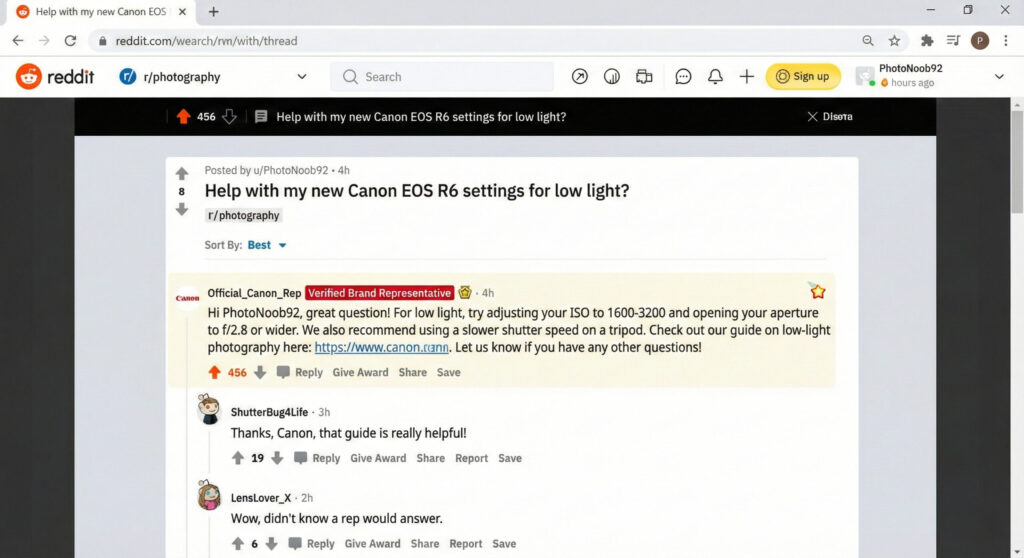
This is where AI Search vs SEO gets interesting. Semrush data indicates that AI models place a heavy weight on User-Generated Content (UGC). Why? Because Reddit threads and Quora answers feel “real” to the algorithm, whereas standard blog posts often feel like marketing fluff.
The Action Plan:
-
Brand Monitoring: Track mentions of your brand on Reddit, Quora, and generic forums.
-
Participation: Don’t spam. Have your experts participate in discussions. If an AI sees your brand consistently mentioned as the solution to a specific problem in a Reddit thread, it strengthens the association between your Brand Entity and that Topic.
-
Encourage Reviews: Not just star ratings, but descriptive reviews. “Great battery life” in a review helps the AI answer the question “Which phone has the best battery?”
Step 4: The “Freshness” Factor
Here is a stat that blew my mind: Content updated within the last 13 weeks is 50% more likely to be cited by an AI search engine.
The Action Plan:
-
Cyclical Audits: You can no longer publish and forget. Set up a quarterly review cycle for your top 20% traffic-driving pages.
-
Update Data Points: Change the year, update the statistics, and add a “Latest Update [Month Year]” note at the top.
Pro Tips: Advanced Tactics for the AI Era
Having messed around with prompt engineering for automation scripts, I’ve learned a few things about how these models “think” that most SEOs miss.
1. The “Vector Search” Optimization
LLMs use vector embeddings to understand semantic closeness. If you want to rank for “CRM software,” don’t just repeat that keyword. You need to include semantically related concepts that appear in the same “vector space”—words like “pipeline management,” “churn reduction,” “SaaS integration,” and “customer lifecycle.”
-
Tip: Use tools like SurferSEO or generic text analysis tools to find “missing entities” in your content.
2. Protect Your Brand Narrative
Hallucinations are real. If there is a lack of information about your brand, the AI will make it up.
-
Tip: Create a robust “Press” or “Media Kit” page on your site. List exactly what you do, your history, and your key executives. This serves as a “ground truth” source for the models to reference.
Troubleshooting: Why You Might Be Losing Traffic
If you see a dip, don’t panic and assume AI Search replace SEO has finally happened. In my experience, it’s usually one of these three things:
1. The “Zero-Click” Phenomenon
The Symptom: Impressions in GSC are stable, but CTR is tanking. The Cause: Google (or the AI overview) is answering the question directly on the results page. The Fix: You cannot fight this for simple queries (e.g., “What is the capital of Vietnam?”). Pivot your content strategy to “Complex Queries” that require deep reading, opinion, or human experience—things an AI summary can’t fully satisfy.
2. Technical Blocking
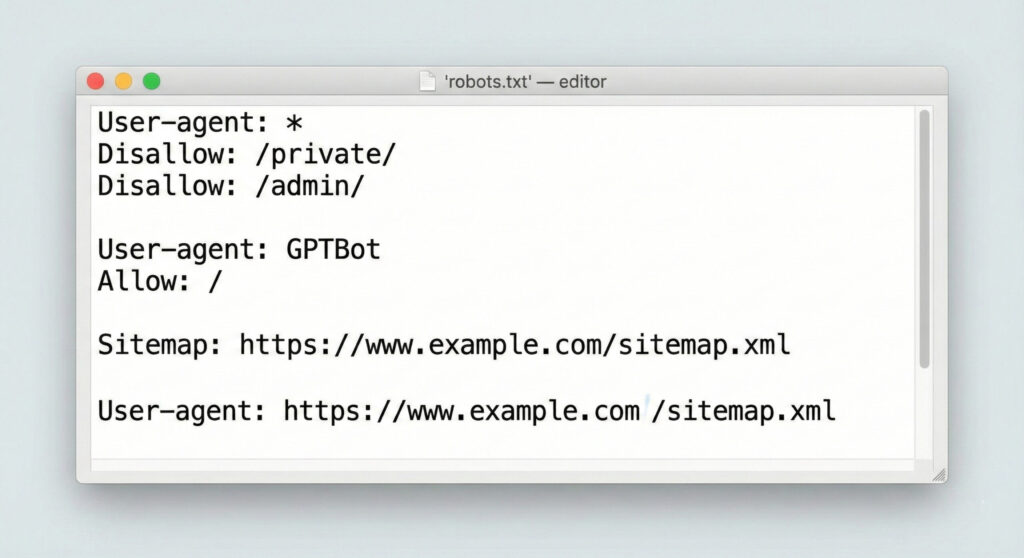
The Symptom: Your content isn’t showing up in ChatGPT citations at all. The Cause: Check your robots.txt. Did you block GPTBot or CCBot? The Fix:
Plaintext
User-agent: GPTBot
Allow: /
Note: Only do this if you are comfortable with OpenAI using your data for training. If you want traffic from them, you generally have to let them in.
3. “Content Farming” Signals
The Symptom: Rankings drop across the board after a core update. The Fix: Review your content. Does it look like AEO spam? Are you just summarizing other people’s summaries? Reality Check: As James Cadwallader noted, “There is no secret.” If you produce mass-generated content hoping to catch long-tail queries, modern algorithms (both Google’s and AI’s) will flag you as low-quality.
Conclusion: The Future of SEO in the Age of AI
So, will AI Search replace traditional SEO?
No. It will force it to evolve.
The days of tricking a search engine with keyword stuffing or low-quality backlinks are effectively over. The new era requires us to build Brands, not just Websites.
If you are a marketer, you don’t need to “tear it all down and rebuild.” But you do need to add a new layer to your strategy. AI Search is just a new distribution channel—one that demands higher quality, better structure, and genuine authority.
Key Takeaways to implement today:
-
Audit for Entities: Ensure your brand is clearly defined in the Knowledge Graph.
-
Structure for AEO: Use summaries, bullet points, and Q&A schemas.
-
Freshness Matters: Update your core content every 13 weeks.
-
Be Human: Lean into the one thing AI can’t generate—real, messy, human experience.
The train is leaving the station. You can either stand on the tracks debating if it’s real, or you can get on board and steer.
Frequently Asked Questions (FAQ)
Here are the most common questions I get from clients regarding the shift to AI Search.
1. Will AI Search replace traditional SEO entirely?
It is highly unlikely that AI Search will completely replace traditional SEO in the near future. Instead, they are converging. While informational queries (e.g., “how to tie a tie”) are moving to AI, transactional and complex research queries still rely on traditional search results. Think of AI as a complementary layer, not a total replacement.
2. What is Answer Engine Optimization (AEO)?
AEO is the practice of optimizing content specifically for AI-driven “answer engines” like ChatGPT, Perplexity, or Google’s AI Overviews. Unlike traditional SEO which focuses on ranking links, AEO focuses on becoming the cited source of the direct answer generated by the AI.
3. Is SEO dying because of AI Search?
No, SEO is not dying, but “easy” SEO is. The “10 blue links” model is changing, but the need for discoverability is higher than ever. Websites that rely on low-quality, generic content will die, but those with strong E-E-A-T (Experience, Expertise, Authoritativeness, Trustworthiness) will continue to thrive.
4. How can I block my content from being used by AI?
You can use your website’s robots.txt file to disallow specific user agents. For example, blocking GPTBot prevents OpenAI from scraping your site. However, be aware that this also prevents your site from being cited as a source in their answers, potentially costing you traffic.
5. What specific content format does AI prefer?
AI models prefer structured data. Content with clear headings, bulleted lists, summary tables, and direct Q&A formats (Question immediately followed by a concise Answer) tends to be picked up more frequently by Large Language Models.